To the untrained eye, a composite repair wrap might look like a simple wet bandage wrapped around a leaking line. However, beneath that damp exterior lies a highly engineered material science synergy between continuous high-modulus glass fibers and moisture-cured prepolymer resins. When a high-pressure line bursts in an industrial facility, the temporary fix must withstand severe dynamic stress, pressure spikes, and chemical exposure without shrinking or delaminating. Understanding the chemistry behind a professional pipe repair kit is essential for plant engineers and procurement managers who need to evaluate composite sleeve integrity, curing shrinkage rates, and long-term hoop stress capacity before approving emergency MRO supplies.
Fiberglass Weave Architecture: S-Glass vs. E-Glass Mechanical Strength
The primary load-bearing component of any composite repair wrap is its woven fabric reinforcement. Glass fibers provide high tensile strength and dimensional stability, ensuring that fluid pressure inside the pipe is evenly distributed across the entire repair sleeve rather than concentrated over the defect hole.
Industrial-grade kits utilize heavy-duty E-glass or specialized S-glass roving woven in a multi-axial pattern. This specific weave structure allows the bandage to conform 360 degrees around complex fittings like elbows and tees without folding or creating stress concentration points. To explore how fiberglass composite wraps perform across various pipe materials like steel, PVC, and HDPE, review our master guide, The Ultimate Guide to Industrial Pipe Leakage Solutions: Emergency Repair & Long-Term Prevention.
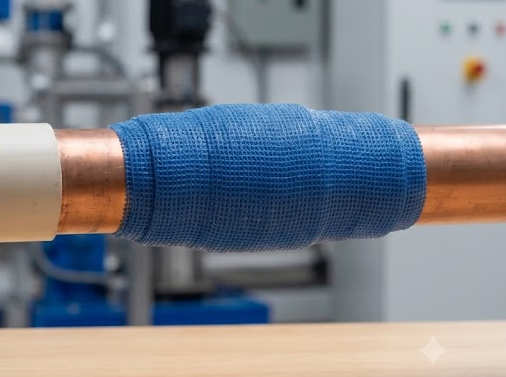
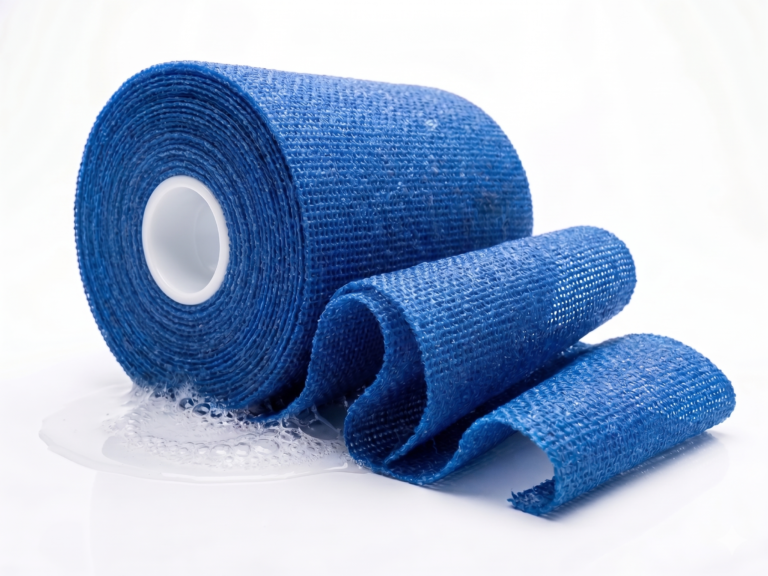
Figure 1: Microscopic view of high-modulus woven fiberglass filaments embedded within a polymer resin matrix.
Polyurethane Polymerization: The Moisture-Activation Reaction
The secret to rapid field deployment lies in the resin matrix. Rather than requiring complex two-part mixing in the field, a professional pipe repair kit uses a specialized water-activated polyurethane prepolymer system containing active isocyanate groups ($-NCO$).
When the wrap is submerged in water ($H_2O$), a rapid exothermic reaction begins:
- Step 1: Catalyst Activation: Water molecules react with the prepolymer’s isocyanate groups, forming unstable carbamic acid intermediates that quickly break down into amine groups and carbon dioxide ($CO_2$) gas.
- Step 2: Urea Cross-Linking: The resulting amine groups immediately react with remaining isocyanate molecules to form tough polyurea linkages. This creates a dense, 3D polymer network.
- Step 3: Rapid Solidification: Within 3 to 5 minutes, the liquid resin transitions into a rigid polyurea-polyurethane matrix, locking the fiberglass filaments into a solid composite sleeve with near-zero volumetric shrinkage.
Material Engineering Fact: Polyurethane-polyurea hybrid matrices exhibit superior impact toughness and vibration damping compared to pure epoxies, making them ideal for high-surge industrial lines subject to water hammer.
Material Property Comparison: Composite Wrap vs. Base Metals
To evaluate whether a composite repair can serve as a long-term reinforcement, compare its physical properties against common industrial piping materials:
| Material Property | Polyurethane-Glass Composite | Carbon Steel (A106) | PVC / uPVC |
|---|---|---|---|
| Tensile Strength (MPa) | 280 – 350 MPa | 415 MPa | 45 – 55 MPa |
| Cured Hardness | 85 Shore D | HRB 70–85 | 75–80 Shore D |
| Curing Shrinkage Rate | < 0.1% (Near zero) | N/A | N/A |
| Corrosion Susceptibility | Immune to Rust / Galvanic Attack | High (Requires coating) | Low (UV sensitive) |
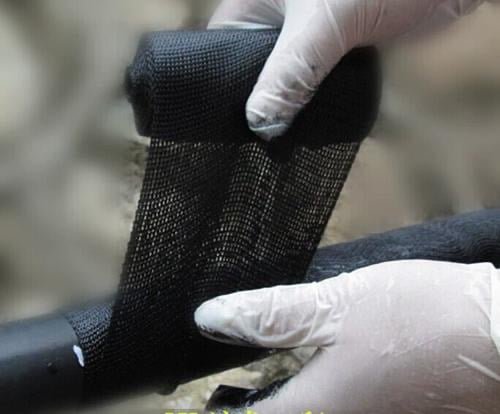
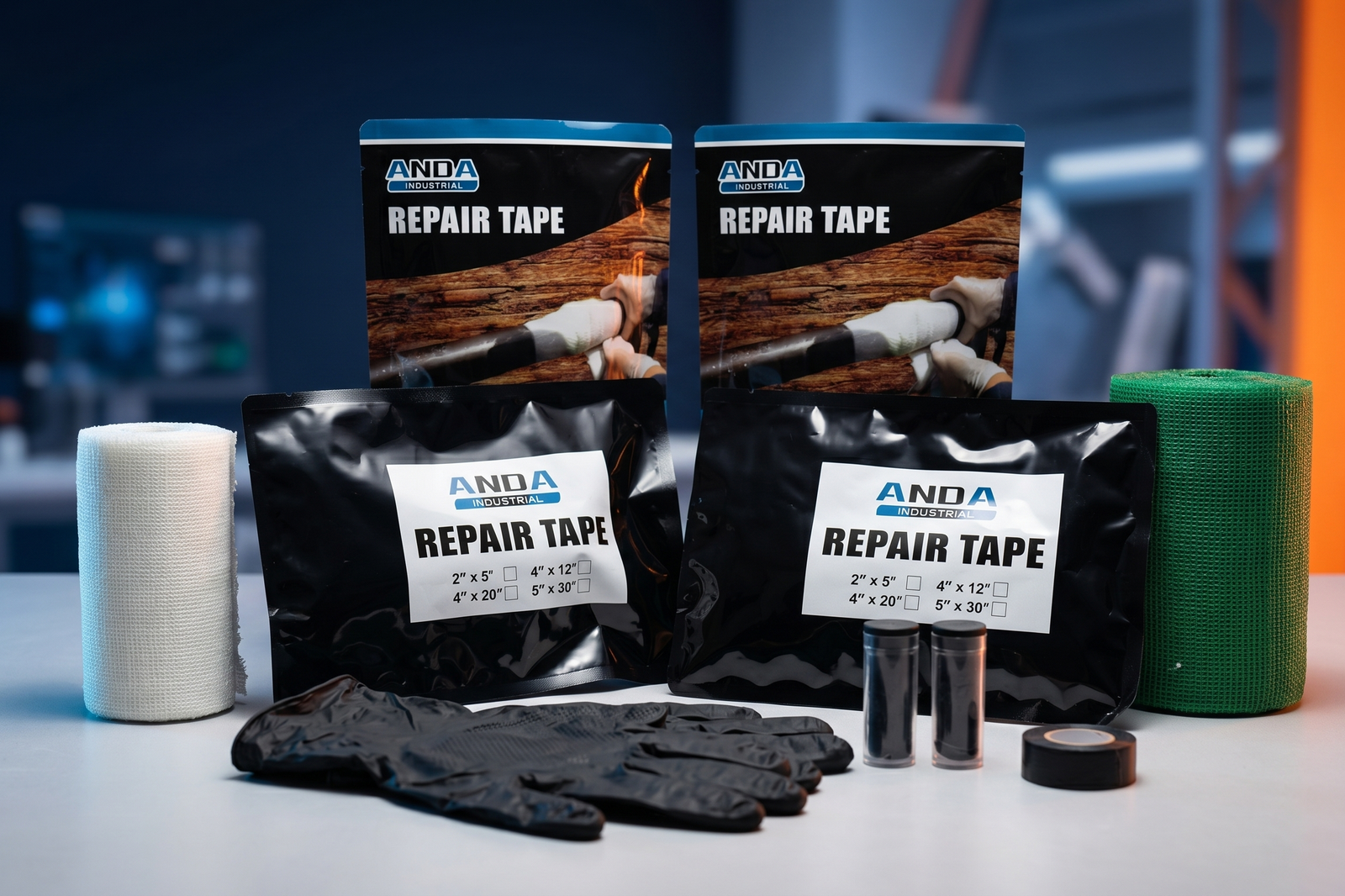
Figure 2: Quality assurance testing verifies tensile modulus and Shore D hardness profiles before batch release.
Why Low Shrinkage Matters for High-PSI Containment
One of the greatest engineering hurdles in composite wrap design is controlling volumetric shrinkage during curing. If a resin matrix shrinks as it hardens, micro-gaps form between the composite sleeve and the underlying pipe substrate. Under high fluid pressure, fluid will path through these microscopic channels, leading to secondary leak bypass.
High-quality composite wraps maintain a curing shrinkage rate below 0.1%. As the polyurethane cross-links, it exerts continuous radial compression against the pipe wall, maintaining tight contact that prevents fluid movement.
Source Factory-Direct Composite Repair Systems
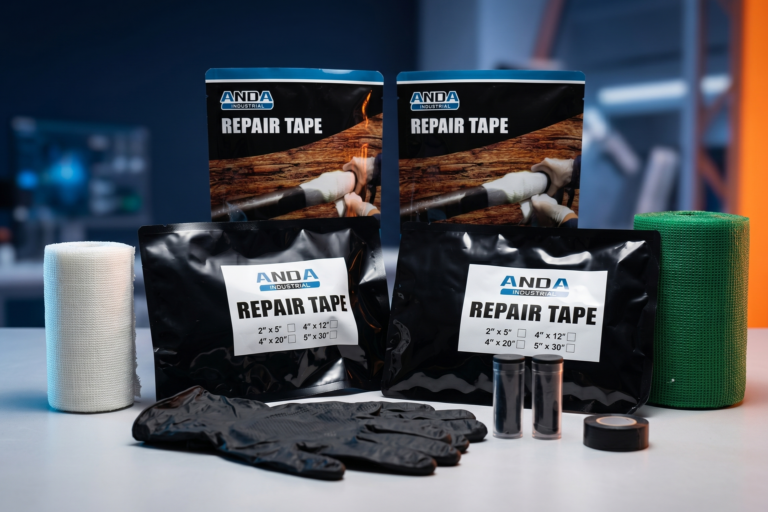
Are you an MRO procurement director, civil engineer, or regional distributor looking for lab-validated composite pipe repair kits? Andarepair offers competitive wholesale pricing, custom kit configurations, and complete TDS/MSDS technical support.
Request a Bulk Price Quote & Technical Data Sheet
Direct Technical Consultation via WhatsApp: +86 18753386785 | Full Burst Test Reports supplied upon request.