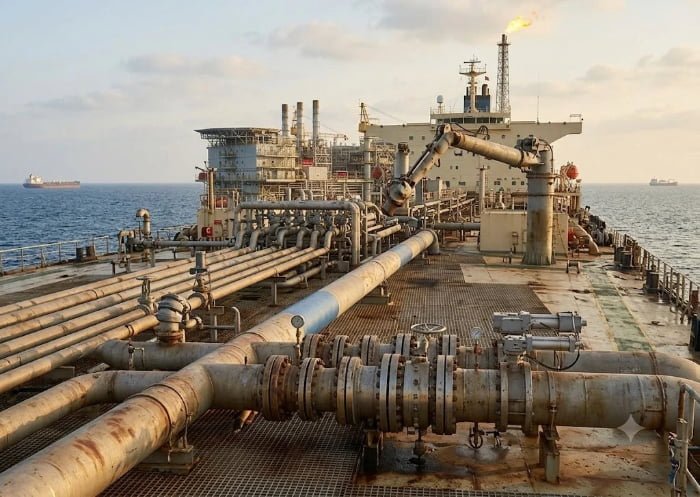
Executive Summary: For chief engineers, vessel superintendents, and offshore rig maintenance directors, piping failure in marine ballast, seawater cooling, or fire main lines presents immediate operational risks. Out in open water or on remote drilling rigs, dry-docking or awaiting replacement spools is rarely an option. According to 2026 offshore asset integrity benchmarks, uncontained seawater loop breaches cause an average operational loss exceeding $320,000 per incident in safety compliance delays and emergency port diversions. Compounding the challenge, marine environments make traditional hot-work welding virtually impossible due to explosive hydrocarbon vapor zones, continuous condensation, and salt-mist saturation. Deploying an effective pipe leakage solution demands composite technologies capable of curing underwater and adhering securely to soaking-wet substrates without losing hoop tensile capacity.
The Maritime Crucible: Why Standard Mechanical and Dry Wraps Fail at Sea
Offshore pipelines operate under intense, multi-axial mechanical stresses. Continuous hull flexing, machinery vibration, dynamic wave action, and high-salinity corrosive environments rapidly degrade carbon steel, copper-nickel (CuNi), and galvanized seawater lines. When pitting breaches occur, high relative humidity (often exceeding 95% in ship bilges and engine rooms) creates an inescapable film of condensation on the pipe exterior.
Standard adhesive wraps and solvent glues require bone-dry substrates to chemically adhere; moisture emulsifies their adhesive layers, causing immediate debonding. Meanwhile, heavy mechanical clamps suffer from severe crevice corrosion when seawater becomes trapped between the metal casing and the pipe wall. To discover how engineered composite repair methods scale across municipal, mining, and heavy industrial fluid networks, explore our master reference, The Ultimate Guide to Industrial Pipe Leakage Solutions: Emergency Repair & Long-Term Prevention.
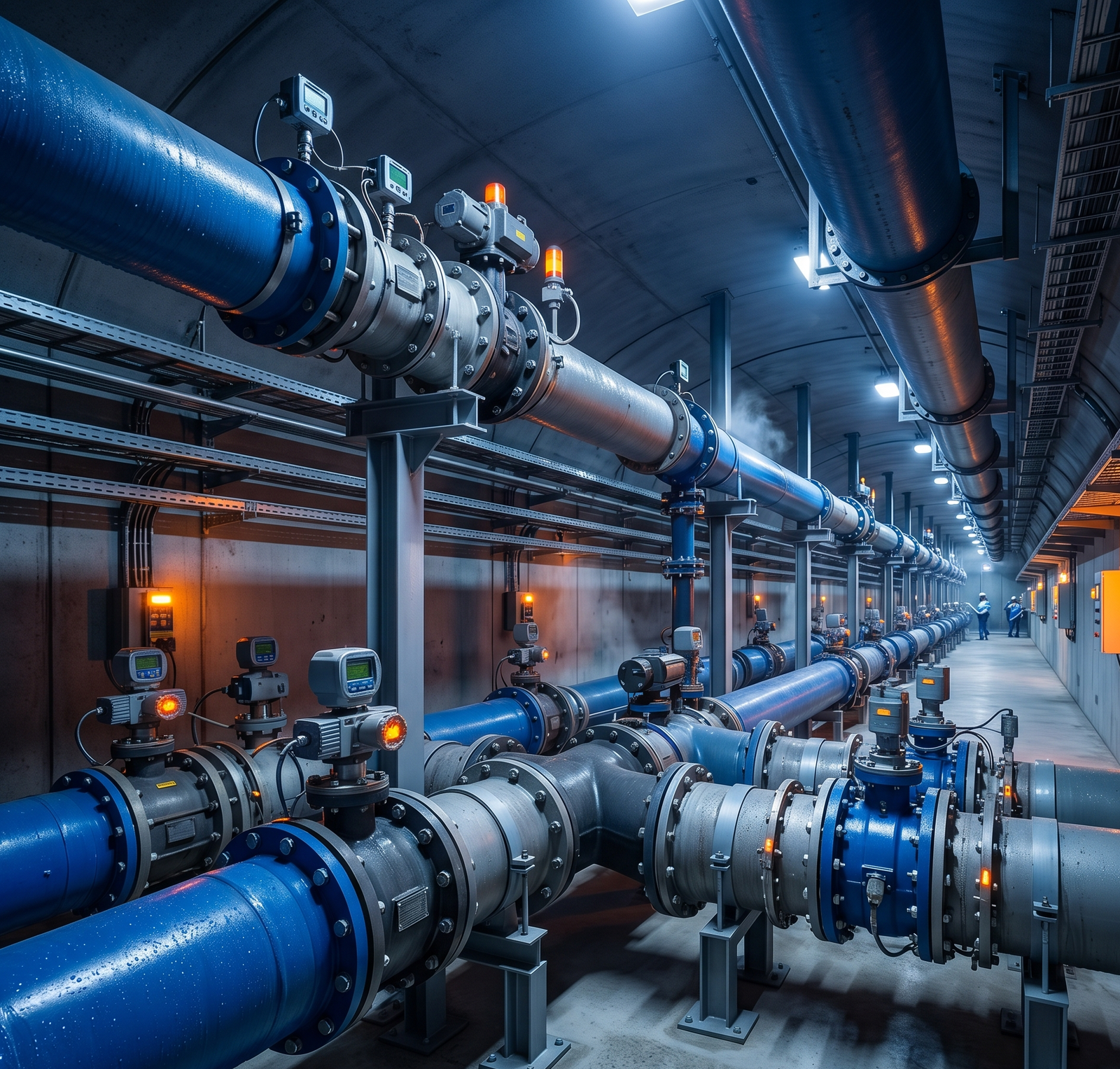
Figure 1: High-salinity engine room cooling loop receiving moisture-cured composite reinforcement under active condensation.
Submerged and Wet-Surface Curing Chemistry: The Andarepair Advantage
What sets an authentic offshore pipe leakage solution apart is its ability to turn surrounding water from an operational enemy into a chemical catalyst. Andarepair marine composite systems utilize a distinct hydro-reactive polymer framework:
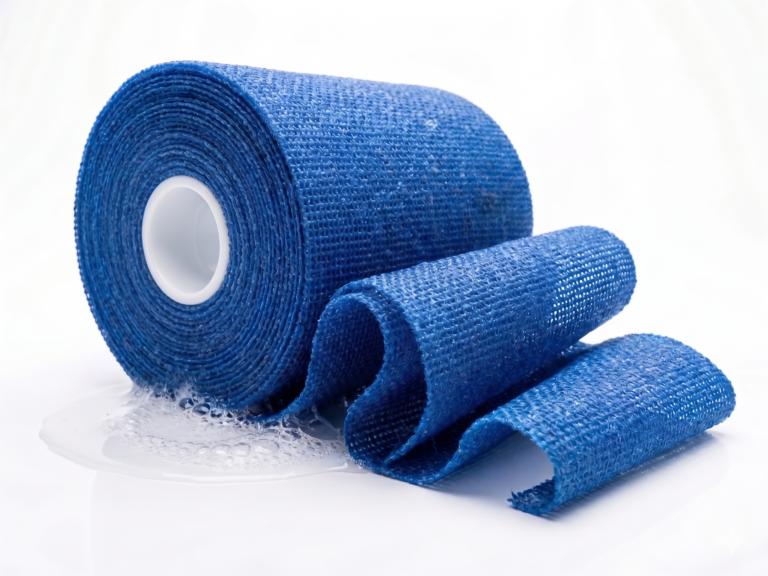
- Hydrophilic Polymer Cross-Linking: The pre-impregnated polyurethane prepolymer resin actively seeks and consumes surrounding moisture ($H_2O$) molecules to drive polymer chain extension. Saltwater or freshwater triggers the same rapid exothermic cross-linking, solidifying the matrix even while completely submerged.
- Moisture-Displacing Underwater Putty: The companion steel-filled epoxy putty is chemically formulated with hydrophobic wetting agents that displace standing water films on the metal surface, creating high-adhesion mechanical bonding without requiring hot-air drying.
- Dynamic Marine Vibration Damping: The cured polyurethane-fiberglass composite matrix absorbs the constant high-amplitude vibrational shocks of marine diesel engines and propulsion shafts, preventing brittle failure where standard rigid putties snap.
Marine Engineering Standard: On ocean-going vessels, hot-work welding requires clearing volatile spaces, marine chemist certifications, and continuous fire watches. Moisture-curing composite wraps are classified as cold-work repairs, completely eliminating flammable gas explosion risks.
Technical Performance: Offshore Reliability Metrics
Vessel superintendents and offshore compliance auditors require verified performance parameters before logging an emergency composite patch into a ship’s planned maintenance system (PMS). Below are verified metrics for the Andarepair wet-cure system:
| Engineering Metric | Tested Performance Value | Offshore Operational Advantage |
|---|---|---|
| Submerged / Wet Curing Window | Full Cure in 30 Minutes | Cures directly in flooding bilges, ballast tanks, or under active condensation. |
| Operating Pressure Threshold | Up to 450 PSI (31 Bar) | Restrains high-velocity surges in shipboard firefighting and deck wash systems. |
| Shore D Hardness Profile | 85 Shore D | Resists wave scouring, dragging chain friction, and external mechanical tool impacts. |
| Salinity & Marine Chemical Defense | Zero Degradation in 3.5% NaCl / Brine | Impervious to galvanic cell degradation, microbial-induced corrosion, and marine diesel. |
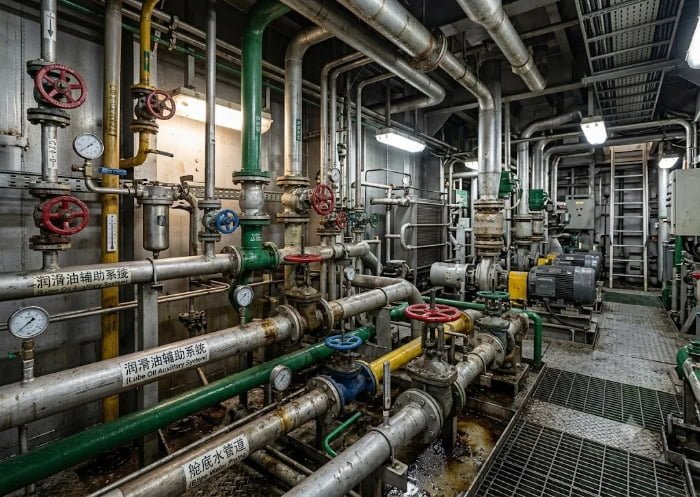
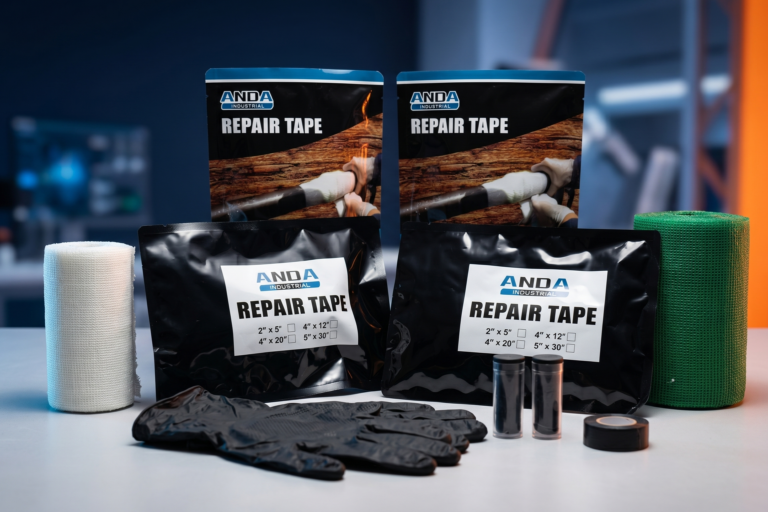
Figure 2: Marine supply lockers stock vacuum-sealed composite kits to safeguard vessel readiness between scheduled shipyard dry docks.
The Shipboard Protocol: 5 Steps to Arrest Leaks in Wet Conditions
When seawater pipe breaches occur at sea, marine crews should execute this field containment procedure:
- Line Isolation & Hydrostatic Relief: Throttle the relevant service valve or divert flow via bypass to relieve internal hydrostatic head pressure during application.
- Substrate Descaling: Even if the pipe surface remains wet, use a non-sparking wire brush or coarse 40/60-grit emery cloth to mechanically strip away marine growth, loose rust, and salt crusts to achieve an anchor profile.
- Moisture-Displacing Putty Packing: Knead the underwater-rated epoxy putty firmly until homogeneous. Force the putty directly into the pinhole, crack, or seam, smoothing it down flush against the wet pipe exterior.
- Direct Seawater Activation & Tension Wrap: Submerge the fiberglass bandage directly into seawater (or freshwater) for 5 to 10 seconds. Wrap the activated bandage under strong, steady tension starting 2 to 3 inches upstream, maintaining a 50% overlap until an 8-to-12-layer jacket is achieved.
- Consolidation Under Ambient Moisture: Smooth down the outer composite wrap firmly by hand in the direction of the wind to drive out entrapped water and air voids. Allow 30 minutes for full chemical polymerization before bringing the seawater loop back online.
FABE Procurement Realization: Strategic Value for Fleet Supply Chains
Evaluating shipboard MRO inventory requires balancing maritime safety compliance with total fleet procurement economics:
- Features: Our specialized marine pipe leakage solution combines water-activated, pre-impregnated fiberglass bandages with moisture-displacing epoxy putties vacuum-sealed in corrosion-proof foil packs.
- Advantages: Requires zero dry substrate conditions, cures fully submerged in saltwater, and conforms around tight engine room elbows and bulkheads without hot-work safety permits.
- Benefits: Prevents emergency vessel diversions, avoids expensive off-hire charter penalties, and keeps vital cooling and bilge systems operational until scheduled dry-dock periods.
- Evidence: Deployed across commercial container fleets, offshore supply vessels (OSVs), bulk carriers, and semi-submersible drilling platforms worldwide. Supported by full marine-compatible TDS documentation.
Equip Your Fleet with Certified Marine Leak Containment Kits
Are you a ship chandler, marine technical superintendent, or offshore platform MRO procurement manager looking for certified wet-cure pipe repair inventory? Andarepair supplies global maritime operators with competitive fleet pricing, customized shipboard kit packages, and complete technical compliance documentation.
Request a Fleet Wholesale Quote & Free Marine Sample Kit
Direct Maritime Technical Consultation via Senior Export Management: Phone/WhatsApp: +86 18753386785 | Full Marine Technical Data Sheets (TDS) supplied upon inquiry.