Executive Summary: For plant maintenance directors, facility engineers, and MRO procurement leads across chemical manufacturing, mining operations, and municipal infrastructure, an unscheduled fluid breach represents an immediate threat to operational profitability. Industrial asset management benchmarks indicate that unplanned pipeline failures trigger an average downtime loss of $180,000 per hour in lost output, regulatory fines, and emergency dispatch labor. Traditional reliance on immediate hot-weld cutouts or complete spool replacements causes severe bottlenecks that modern continuous-production facilities cannot afford. Identifying the right pipe leakage solution requires balancing operational pressure, fluid toxicity, fitting geometry, and execution speed. This engineering review evaluates the seven most effective industrial leak containment methods available to help maintenance managers choose the optimal strategy for their piping assets.
The Modern MRO Paradigm: Why One Containment Method Does Not Fit All
Industrial piping arrays transport an enormous variety of media—ranging from ambient cooling water and abrasive mineral slurries to high-temperature steam, aggressive acids, and volatile hydrocarbons. A method that secures a low-pressure PVC drain line will fail catastrophically if deployed on a vibrating carbon steel slurry discharge line.
Rather than maintaining a single patch product, modern MRO departments establish multi-tiered containment frameworks categorizing methods by cure speed, pressure limits, geometric conformability, and hot-work safety compliance. To explore how comprehensive leak mitigation integrates across steel, copper, PVC, and HDPE substrates, review our foundational master reference, The Ultimate Guide to Industrial Pipe Leakage Solutions: Emergency Repair & Long-Term Prevention.
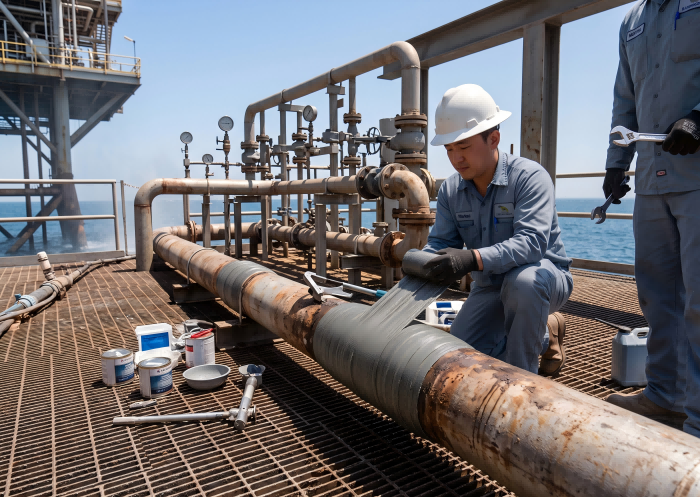
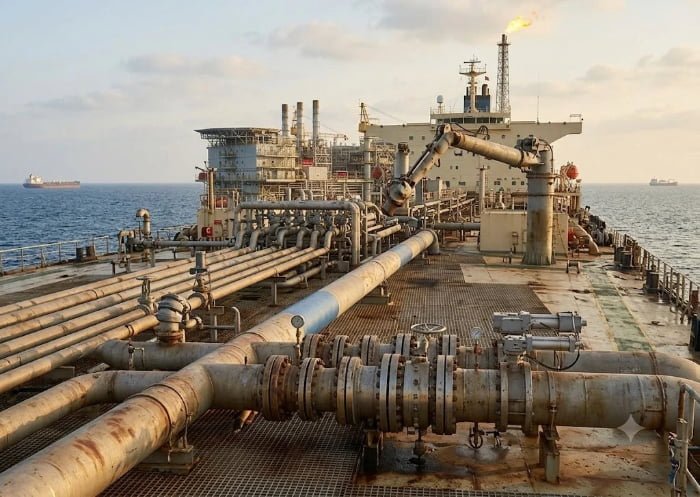
Figure 1: Maintenance engineers inspect high-pressure distribution manifolds to deploy targeted pipeline containment systems.
The 7 Core Industrial Pipe Leakage Solution Options
Below is a breakdown of the seven primary remediation methods utilized across global heavy industry:
1. Moisture-Cured Fiberglass Composite Repair Wraps
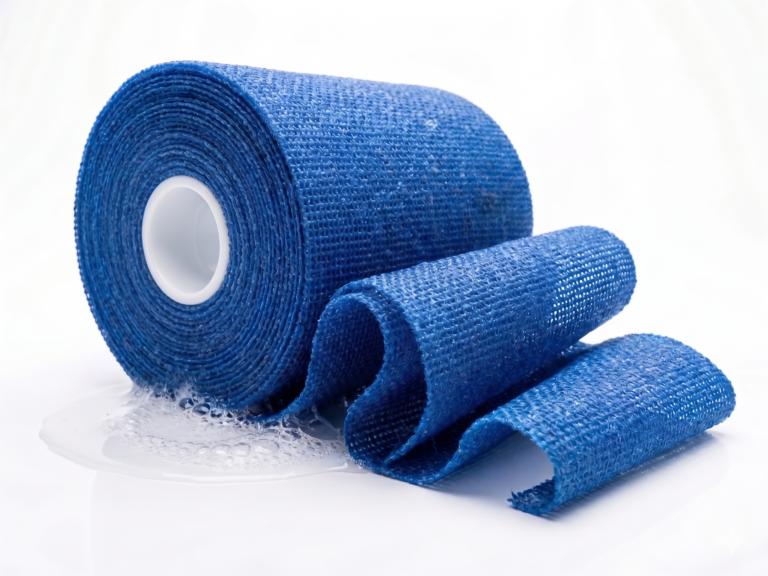
Pre-impregnated with water-activated polyurethane prepolymers, these bandages cross-link into an 85 Shore D rigid composite sleeve within 30 minutes. They provide 360-degree radial hoop strength up to 450 PSI, conform easily to elbows and tees, and require zero open flames or specialized tooling.
2. Steel-Filled Epoxy Putties and Cold-Weld Pastes
High-density, two-component polymer compounds loaded with microscopic steel reinforcements. Ideal for fairing out surface pitting, filling pinholes, and rebuilding thinned pipe geometries prior to structural overwrapping.
3. Mechanical Split-Sleeve Clamps
Rigid bolted metal housings fitted with elastomeric internal gaskets. They offer fast, bolt-on mechanical containment on straight pipe runs without requiring chemical curing time, though they are limited on irregular fittings.
4. Online Leak Sealing Enclosures (Injection Clamps)
Engineered pressure-retaining boxes installed over live leaks. Once bolted around the pipe or flange, specialized thermosetting sealant is injected under hydraulic pressure to encapsulate high-temperature, active leaks without depressurization.
5. Cured-in-Place Pipe (CIPP) Trenchless Lining
A trenchless remediation method where a resin-saturated felt tube is inverted into damaged underground conduits and cured using hot water, steam, or UV light, constructing a jointless “pipe-within-a-pipe” for large-diameter municipal and industrial networks.
6. Fiber-Reinforced Polymer (FRP) Structural Chemical Overlays
Custom lamination utilizing vinyl ester or epoxy resins paired with bi-directional glass or carbon fiber fabrics. Designed specifically for severe chemical immersion, pickling lines, and highly acidic process headers.
7. Conventional Hot-Work Cut & Welded Spool Replacement
The traditional baseline method involving complete system isolation, line flushing, cutting out degraded pipe sections, and welding new certified spools. Highly reliable but demands extensive downtime, hot-work permits, and heavy labor.
MRO Decision Rule: When selecting a pipe leakage solution, evaluate whether cold-work composite wrapping or mechanical clamping can restore full operating pressure without the costly downtime and permit constraints of open-flame hot welding.
Comparative Engineering Matrix: 7 Options Side-by-Side
Use this side-by-side engineering matrix to compare operational boundaries, installation windows, and cost profiles:
| Remediation Method | Typical Pressure Rating | Average Cure / Execution Time | Geometry Flexibility |
|---|---|---|---|
| 1. Fiberglass Composite Wraps | Up to 450 PSI (31 Bar) | 30 Minutes | Excellent (Elbows, Tees, Reducers) |
| 2. Steel-Filled Epoxy Putties | Up to 150 PSI (Plug only) | 15 to 20 Minutes | High (Molds to voids and pits) |
| 3. Mechanical Split Clamps | 200 to 300 PSI | 15 Minutes | Low (Straight pipe runs only) |
| 4. Online Injection Clamps | Up to 1,500+ PSI | 2 to 4 Hours | Moderate (Custom machined) |
| 5. CIPP Trenchless Lining | Gravity to 150 PSI | 8 to 24 Hours | High (Internal continuous conduit) |
| 6. FRP Chemical Overlays | 300 to 500 PSI | 2 to 6 Hours | High (Manual lamination) |
| 7. Welded Spool Replacement | Full Pipe Specification | 12 to 48 Hours | Rigid (Requires pipe fitting) |
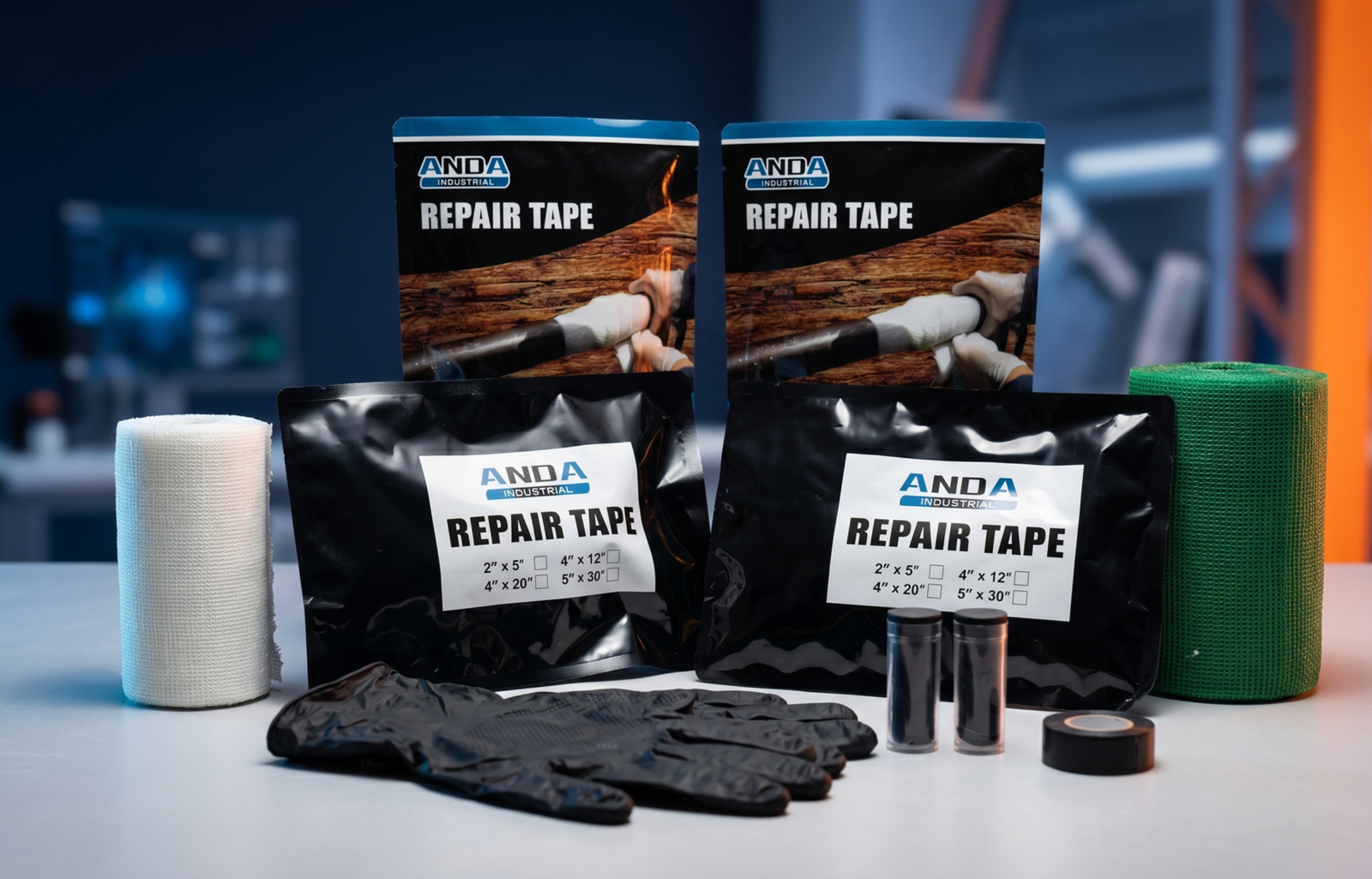
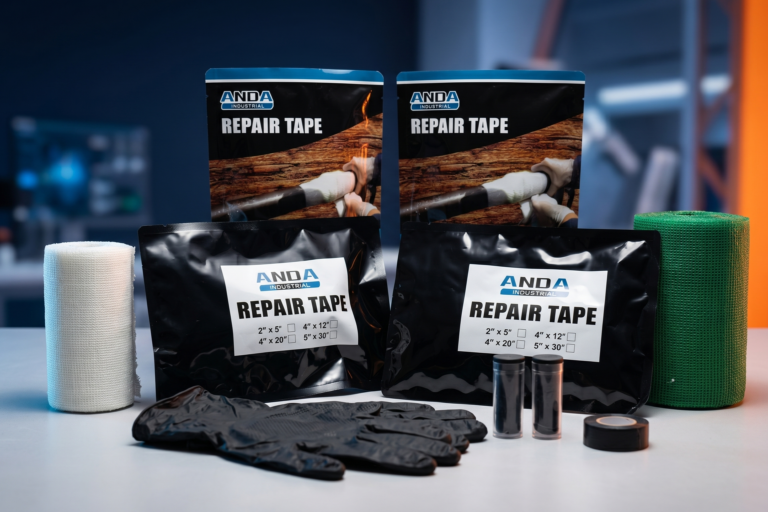
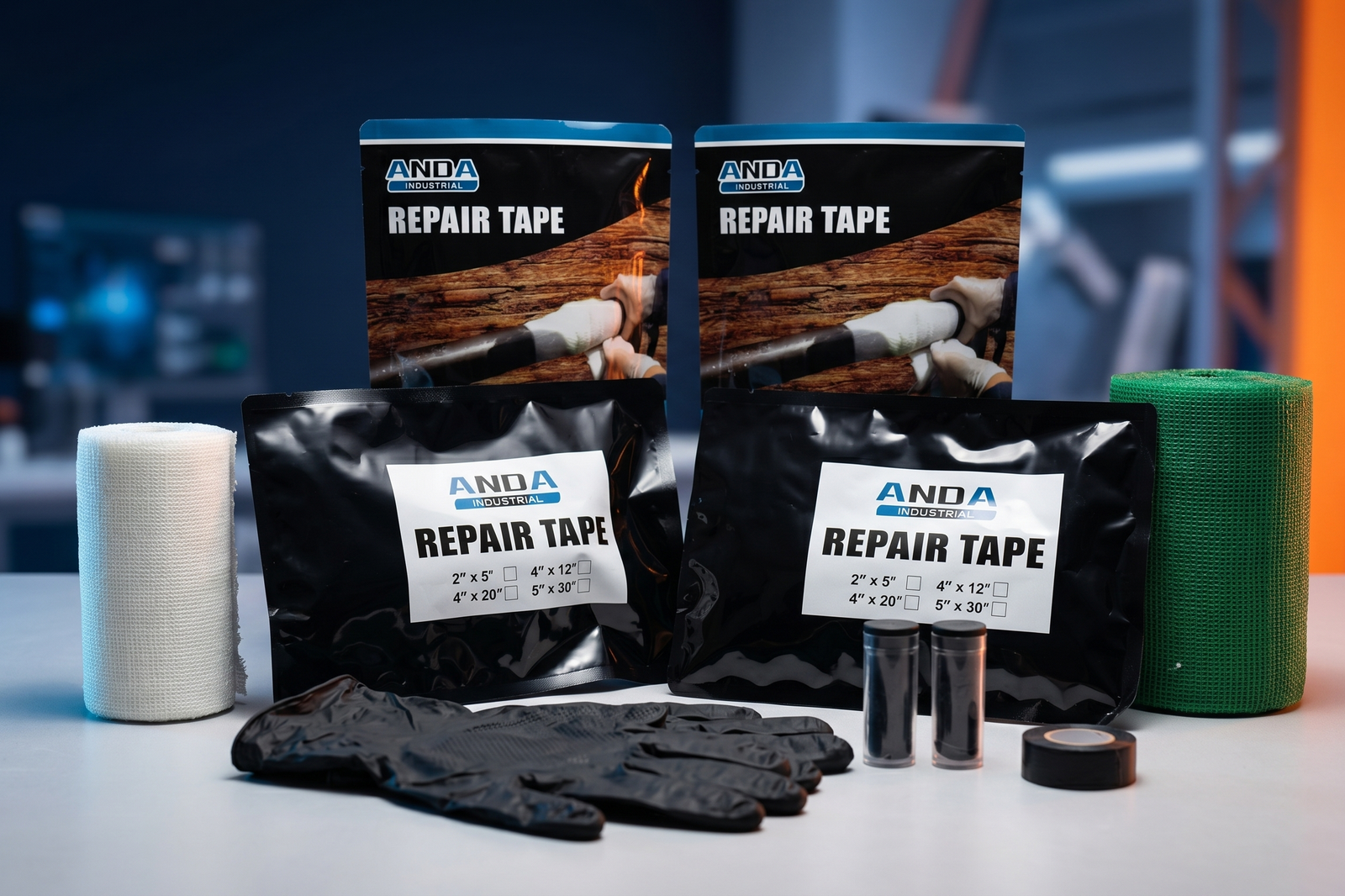
Figure 2: MRO stockrooms maintain pre-staged composite pipe repair kits for rapid containment of unscheduled leaks.
Standardizing Emergency Response Protocols for Field Teams
To minimize decision fatigue during an active emergency, industrial maintenance managers should establish clear, pre-defined operational workflows:
- Step 1: Medium and Pressure Triage: Identify fluid chemistry, temperature, and line pressure immediately. Check if the line can be safely isolated or if an online live containment protocol is mandatory.
- Step 2: Geometry & Substrate Evaluation: Determine whether the breach is located on a straight run (suitable for mechanical clamps) or on an irregular fitting (requiring conformable composite wraps or epoxy putty).
- Step 3: Surface Keying Protocol: Regardless of the method chosen, mechanically prepare the substrate to an St2 or Sa2.5 anchor standard to ensure strong bonding and prevent mechanical sliding under pressure.
- Step 4: Layered Structural Execution: Apply primary void fillers to eliminate defect gaps, followed by high-tension composite wrapping (8 to 12 layers) to re-establish structural hoop integrity.
FABE Procurement Realization: Strategic Value for Global Supply Chains
Standardizing your facility’s MRO inventory with an engineered composite pipe leakage solution provides proven financial and operational benefits:
- Features: Andarepair composite systems integrate high-viscosity steel-filled epoxy putties with water-activated fiberglass bandages sealed in 4-layer moisture-proof foil packaging.
- Advantages: Conforms 360 degrees around any irregular pipe fitting, cures reliably within 30 minutes in damp or submerged environments, and withstands operating pressures up to 450 PSI.
- Benefits: Reduces emergency repair expenditure by up to 85% compared to conventional hot-work spool replacement, eliminating unscheduled facility shutdowns and maintaining production continuity.
- Evidence: Deployed across mining slurry networks, chemical processing facilities, municipal water mains, and marine engine loops worldwide. Backed by certified burst testing and complete MSDS documentation.
Equip Your Facility with Industrial-Grade Leak Containment Systems
Are you an industrial plant maintenance manager, municipal water engineer, or MRO distributor looking to stock certified pipe repair solutions? Andarepair supplies global industrial clients with competitive wholesale pricing, custom kit configurations, and complete technical documentation.
Request a Bulk Price Quote & Free Sample Kit
Direct Engineering Consultation via Senior Export Management: Phone/WhatsApp: +86 18753386785 | Technical Data Sheets (TDS) supplied immediately upon commercial inquiry.