High-Density Polyethylene (HDPE) pipelines are widely trusted across municipal water networks, mining slurry lines, and industrial chemical processing due to their flexibility and corrosion resistance. However, when an unexpected crack, puncture, or joint degradation causes an active leak, conventional thermal fusion techniques often fall short—requiring complete system shutdowns, line draining, and specialized heavy machinery that cost thousands of dollars per hour in operational downtime.
A common misconception in plant maintenance is that HDPE pipes cannot be bonded or wrapped effectively due to their low surface energy. In this guide, we break down proven composite mechanics and provide a field-tested methodology for a complete hdpe pipe leakage solution. Learn how to achieve rapid emergency sealing and structural reinforcement using advanced moisture-curing polyurethane composites without stopping your system operations.
Understanding HDPE Repair Mechanics: Challenges & Solutions
HDPE belongs to the polyolefin family, characterized by a non-polar, non-porous surface that chemically resists standard adhesives and solvent cements. Traditional epoxy pastes alone fail to adhere strongly, leading to bond line separation under cyclic pressure.
Why Conventional Fusion Isn’t Always Feasible During Emergency MRO
Electrofusion and butt fusion require dry conditions, clean pipe margins, and complete depressurization. In active industrial environments, draining miles of pressurized pipeline just to fix a localized 2-inch pinhole leak is economically unviable.
The Composite Reinforcement Principle
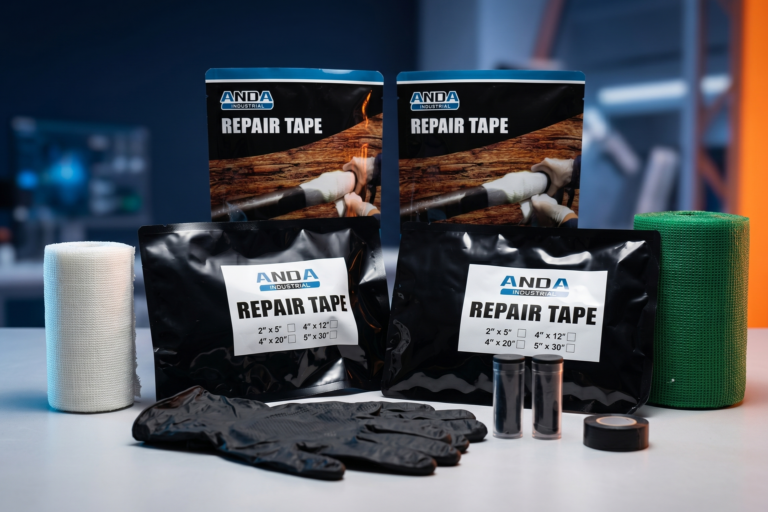
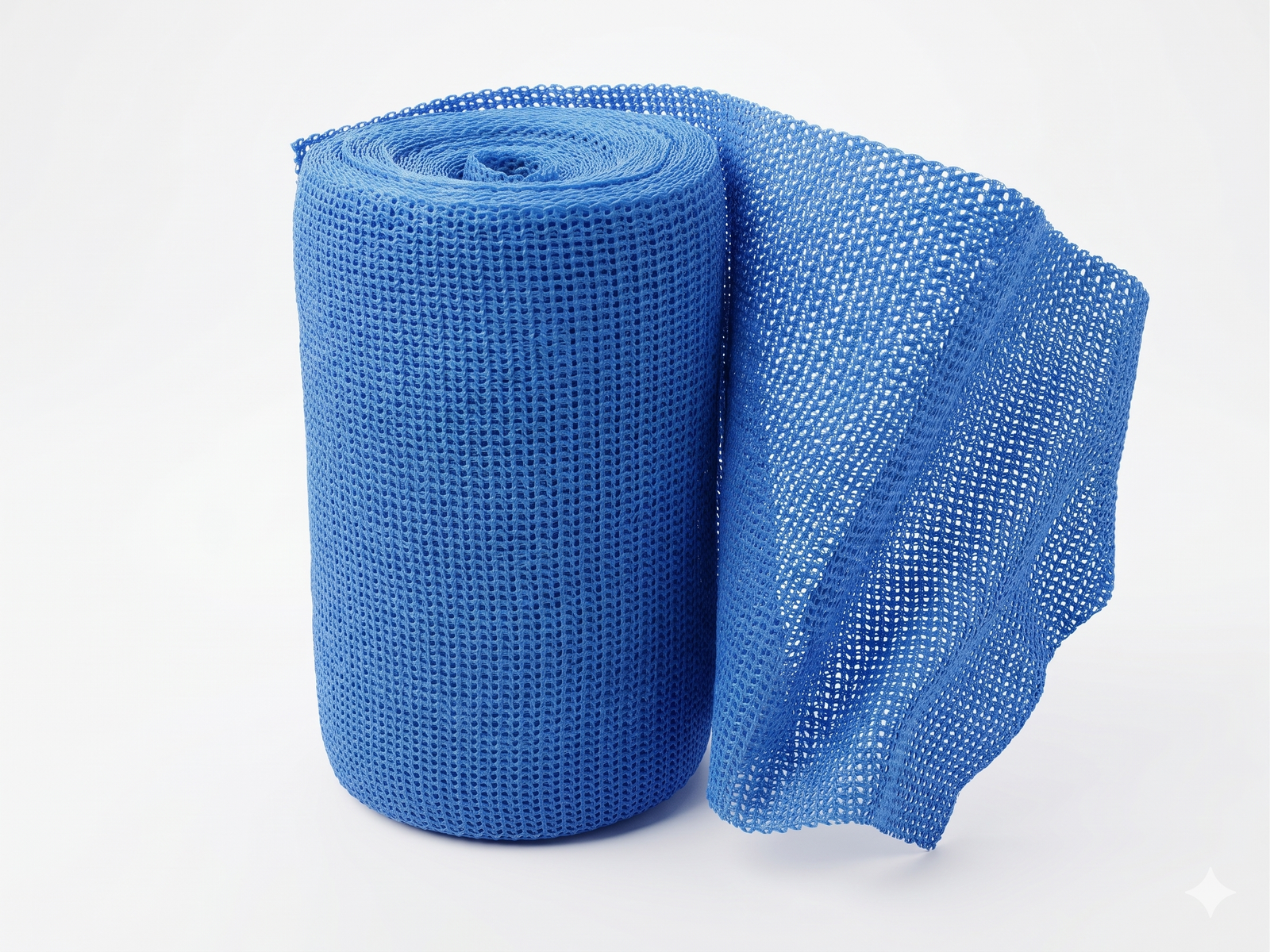
To overcome surface adhesion limitations, modern engineering relies on mechanical hoop-stress distribution. By combining an elastomeric pressure-sealing plug with a high-tensile water activated pipe repair wrap, the inner plug stops the fluid while the outer resin-impregnated fiberglass fiberglass layers form a high-strength structural shell around the pipe circumference. This composite sleeve transfers radial expansion forces away from the damaged zone.
Step-by-Step Execution: Emergency to Permanent HDPE Pipeline Sealing
Follow this standardized field protocol to apply an engineered pipe repair kit to active HDPE leaks under pressure up to 10 bar (145 psi).
Step 1: Surface Preparation and Mechanical Abrasion
Proper surface prep accounts for 80% of composite repair performance. Clean the repair zone extending 100mm (4 inches) past the damage in both directions. Use 40-grit coarse sandpaper or a rotary file tool to cross-hatch the HDPE surface. This creates mechanical anchor profiles (roughness) that allow the secondary resin structure to interlock tightly around the substrate.
Step 2: Active Leak Sealing with Steel-Filled Epoxy Putty
Knead a fast-curing, steel-reinforced epoxy putty or specialized rubber seal plug until uniform in color. Press the putty firmly directly into the leak orifice. For active pressure leaks, secure the plug with a temporary mechanical clamp or heavy-duty pipe leakage tape until the sealing compound reaches initial set (typically 3–5 minutes).
Step 3: Wrapping the Structural Pipe Repair Bandage
Submerge the fiberglass pipe repair bandage in fresh water for 10–15 seconds to initiate the polyurethane reaction. Immediately wrap the tape around the pipe with 50% overlap, maintaining tight, continuous tension. Ensure the wrap extends at least 50mm past the putty edge on both sides, accumulating a minimum of 8 to 10 tight layers directly over the leak site.
Field Engineering Insight: When wrapping HDPE lines, pay close attention to tension loss during direction changes. Unlike rigid steel, HDPE expands elastically under pressure cycles. Squeezing and rotating the wrapped composite in the direction of the wrap forces air bubbles out and ensures maximum layer-to-layer resin bonding.
Step 4: Exothermic Curing & Pressurization Test
Allow 30 to 45 minutes for the moisture-cure resin to undergo its exothermic reaction. The wrap will become warm to the touch and cure into a rigid, impact-resistant composite shell. Hydrostatic pressure can be fully restored once the outer casing hardens completely.
Technical Comparison: HDPE Repair Methods evaluated
Review how composite wrapping compares against traditional MRO strategies for high-density polyethylene pipelines:
| Repair Method | Requires System Shutdown? | Cure / Execution Time | Pressure Rating | Operational Complexity |
|---|---|---|---|---|
| Composite Wrap Kit (Epoxy Putty + Fiberglass) | No (Live repair under low/medium pressure) | 30 – 45 Minutes | Up to 20 Bar (290 PSI) | Low (1 Technician, No Power Tools) |
| Butt Fusion / Electrofusion | Yes (Full line drain required) | 4 – 8 Hours | Full Pipe Rating | High (Heavy Rigging & Fusion Machinery) |
| Mechanical Bolted Clamps | No | 1 – 2 Hours | Up to 16 Bar (230 PSI) | Medium (Heavy, Subject to Creep & Corrosion) |
Critical Best Practices and Avoidable Mistakes
- Don’t skip surface roughening: Smooth HDPE will cause composite wraps to slide axially under line expansion. Always create a textured cross-hatch profile.
- Do control thermal expansion factors: HDPE has a high coefficient of thermal expansion (COTE). Ensure your composite wrap covers a wide enough landing zone (100mm minimum) on both sides of the damage to accommodate thermal movement.
- Don’t under-wrap the pressure rating: Increasing the layer count exponentially increases burst strength. For lines operating above 6 bar, apply at least 10–12 layers of high-tensile fiberglass tape.
Frequently Asked Questions (FAQ)
Q1: Can a water-activated pipe repair wrap adhere permanently to smooth HDPE surfaces?
While chemical adhesion to smooth HDPE is naturally low, the structural strength of a composite wrap comes from circumferential hoop tension. By creating a mechanical profile via 40-grit sanding and wrapping with 50% overlap, the cured fiberglass forms a continuous rigid outer pipe sleeve that constrains the inner pressure mechanically.
Q2: How much pressure can a temporary or emergency HDPE pipe repair hold?
When installed correctly with high-density steel-reinforced putty and a 12-layer water-activated fiberglass wrap, composite repairs can withstand continuous operating pressures up to 20 bar (290 psi) and peak surge pressure beyond that.
Q3: Is this HDPE pipe leakage solution suitable for hazardous chemical processing lines?
Yes, water-activated polyurethane composite bandages offer excellent resistance to a wide range of industrial chemicals, including diluted acids, alkalis, fuels, and salt water. For aggressive concentrated solvents, pairing the wrap with an advanced resin system like an epoxy pipe wrap or specialized chemical-resistant barrier is recommended.
Q4: What is the shelf life of an emergency pipe repair kit in a plant MRO inventory?
Qualitative resin-impregnated wraps sealed in airtight aluminum foil packaging typically carry a shelf life of 2 to 3 years when stored in a cool, dry environment below 25°C (77°F).
Summary & Operational Takeaways
Fixing an HDPE pipe leak does not require expensive contractor mobilization or days of plant downtime. By leveraging the mechanical hoop stress of composite engineering, MRO personnel can execute an immediate, reliable hdpe pipe leakage solution in under an hour. Keep an industrial-grade steel pipe repair kit or composite wrap system in your facility’s emergency response inventory to stop active leaks, protect against pressure surges, and eliminate unscheduled production halts.