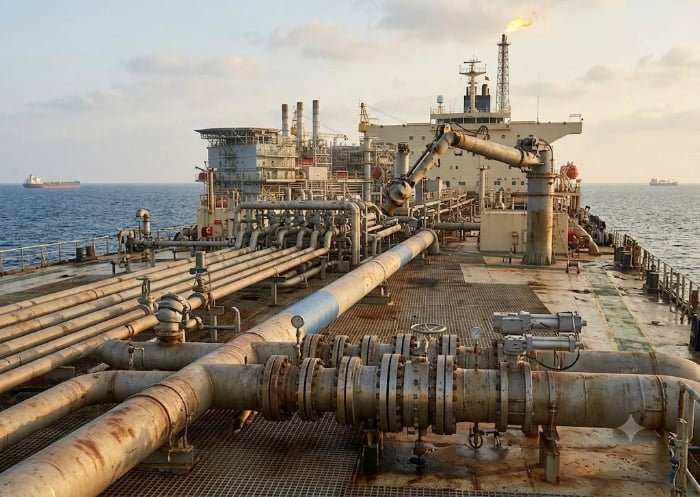
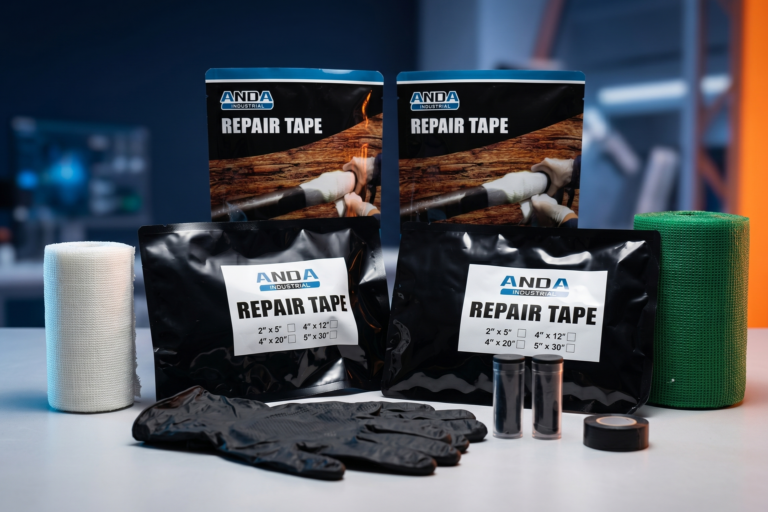
Executive Summary: Managing fluid system integrity across chemical manufacturing, power generation, and heavy processing facilities requires rapid, dependable leak containment. Unscheduled outages caused by piping breaches cost industrial operators an average of $180,000 per hour in lost output and emergency labor. While rigid mechanical split-sleeve clamps (commonly known as split clamps or mechanical collars) have historically served as the go-to maintenance patch, their rigid geometry creates severe operational limitations—particularly when dealing with complex fittings like elbows, tees, and reducing couplings. This engineering analysis compares traditional mechanical clamps against an industrial-grade epoxy pipe wrap, demonstrating why composite wrapping systems offer superior adaptability, corrosion resistance, and long-term pressure sealing on non-straight pipeline geometries.
The Geometry Bottleneck: Why Rigid Clamps Struggle on Complex Fittings
Traditional mechanical clamps rely on a rigid metal shell paired with an internal rubber gasket. To form an effective seal, the clamp requires a perfectly uniform, straight cylindrical surface where equal bolt torque can compress the elastomer evenly. However, real-world industrial piping grids are rarely composed solely of straight runs. Pitting corrosion, wall thinning, and stress fractures frequently occur at high-turbulence zones—specifically 90-degree elbows, unequal tees, reducers, and weld neck flanges.
Attempting to fit a rigid clamp onto an irregular geometry results in uneven gasket compression, leading to immediate or secondary pressure bypass. Furthermore, heavy metal clamps add significant deadweight to un-supported overhead lines, creating localized stress points. To review comprehensive maintenance strategies across various pipe materials—including carbon steel, stainless steel, PVC, and HDPE—explore our master reference, The Ultimate Guide to Industrial Pipe Leakage Solutions: Emergency Repair & Long-Term Prevention.
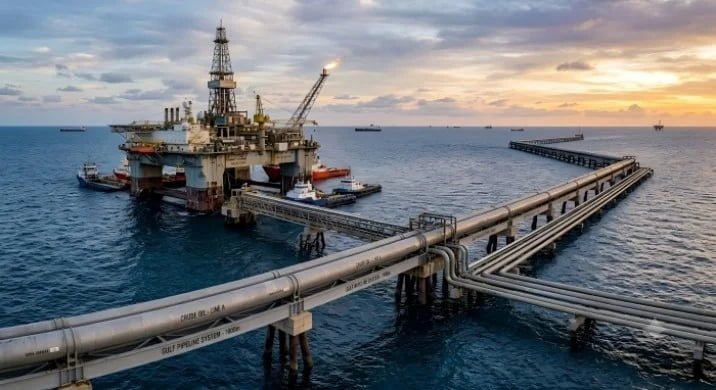
Figure 1: High-pressure industrial elbow fitting reinforced with a conformable composite epoxy wrapping system.
Engineering Comparison: Epoxy Wrap vs. Mechanical Clamps
Evaluating an MRO containment strategy requires analyzing material mechanics, surface adaptability, chemical compatibility, and installation constraints. An advanced epoxy pipe wrap provides clear technical advantages over mechanical hardware across key operational categories:
- 360-Degree Geometric Conformability: Composite wraps consist of flexible, high-tensile fiberglass or carbon tapes pre-impregnated or saturated with high-performance epoxy resins. They wrap effortlessly around curved elbows, T-junctions, variable reducers, and weld seams, forming a seamless, contoured protective jacket.
- Corrosion Passivation vs. Crevice Corrosion: Metallic clamps create a narrow crevice between the outer pipe wall and the clamp body. Moisture trapped in this gap accelerates crevice corrosion. In contrast, an epoxy resin system completely encapsulates the substrate, sealing out moisture and passivating the metal surface against further oxidation.
- Weight and Load Distribution: Heavy mechanical clamps concentrate compressive load directly over weakened, corroded pipe walls, risking collapse. Epoxy wrapping spreads hoop stress evenly across a broad surface area, adding structural integrity without adding heavy cantilever weight to the line.
Field MRO Note: For irregular fittings with severe wall loss, engineers should first apply a steel-filled epoxy putty or load-bearing shaping compound to smooth out the geometric transition before applying the structural composite wrap.
Technical Performance Matrix: Material Capabilities
When selecting repair components for high-pressure or corrosive service, maintenance engineers rely on verified laboratory metrics. Below is a direct comparison between mechanical clamps and composite epoxy wraps:
| Performance Parameter | Traditional Split Clamps | Industrial Epoxy Pipe Wrap |
|---|---|---|
| Fitting Adaptability (Elbows/Tees) | Poor (Requires custom-machined boxes) | Excellent (Conforms to any shape) |
| Maximum Working Pressure | Limited by bolt torque & gasket rating | Up to 450 PSI (31 Bar) with multi-layers |
| Cured Outer Hardness | N/A (Rigid metal body) | 85 Shore D (High impact resistance) |
| Chemical Corrosion Resistance | Subject to gasket degradation & rust | Broad resistance to acids, alkalis & fuels |
| Structural Reinforcement | Local containment only | Restores hoop stress & wall strength |
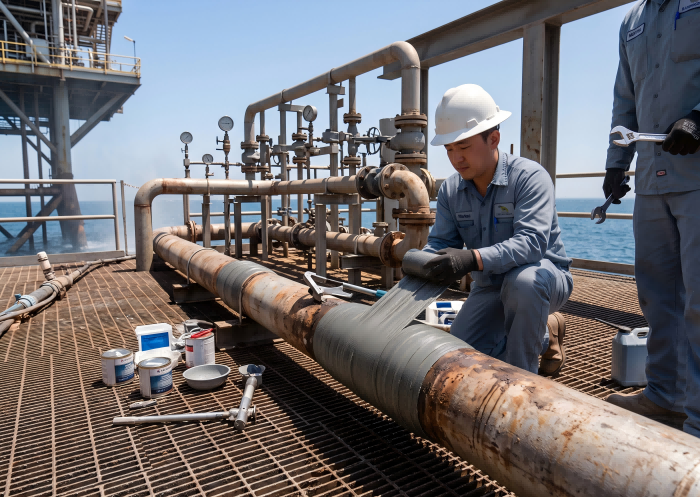
Figure 2: MRO stockrooms maintain active composite wrapping inventories to handle unexpected leaks on irregular piping loops.
Field Execution: 5 Steps for Repairing Irregular Fittings
To secure a long-term, high-pressure composite seal over complex fittings using an industrial epoxy pipe wrap kit, field technicians should execute this sequence:
- System Depressurization & Cleaning: Isolate line pressure. Clean away dirt, scale, oil, and loose corrosion products from the fitting surface.
- Substrate Keying: Sand the metal or plastic substrate with 60-grit abrasive cloth or mechanical grinders to establish an St2 / Sa2.5 cleanliness standard with a rough anchor profile.
- Profile Shaping & Leak Plugging: Mix the high-density epoxy putty provided in the kit. Pack the putty into defect pits, holes, or weld seam steps, building a smooth contour across the fitting geometry.
- Tension Wrapping: Activate the resin-impregnated wrapping tape (submerging in water for moisture-cured systems or mixing two-part epoxy systems). Wrap tightly around the fitting, ensuring a 50% overlap per pass and extending at least 2 inches onto straight pipe sections on both sides.
- Consolidation & Curing: Smooth down the outer sleeve in the direction of the wrap to expel micro-air pockets and consolidate resin layers. Allow 30 minutes for full polymer cross-linking before repressurizing the line.
FABE Value Realization: The Strategic Advantage of Andarepair Systems
Choosing composite repair solutions over legacy hardware provides measurable financial and operational benefits for enterprise supply chains:
- Features: The Andarepair epoxy pipe wrap system integrates high-adhesion load-shaping putties with high-tensile fiberglass or carbon composite bandages vacuum-packed for extended shelf life.
- Advantages: Conforms 360 degrees to any pipeline geometry without requiring custom-machined parts, cures under damp or submerged settings, and cures to an 85 Shore D hardness profile.
- Benefits: Eliminates up to 80% of maintenance expenditure compared to custom mechanical boxes or full line replacements, avoiding costly plant downtime.
- Evidence: Field-tested across heavy mining slurry lines, chemical processing loops, and marine utility systems worldwide. Supported by full MSDS safety documentation and pressure validation metrics.
Upgrade Your Industrial Pipeline MRO Strategy Today
Are you an industrial procurement manager, regional infrastructure distributor, or ship chandler seeking certified composite leak repair systems? Andarepair provides competitive wholesale pricing, custom kit configurations, and specialized OEM / Private Label manufacturing support.
Request a Bulk Price Quote & Free Sample Kit
Direct Engineering Consultation via Senior Export Management: Phone / WhatsApp: +86 18753386785 | Full Technical Data Sheets (TDS) supplied immediately upon commercial inquiry.