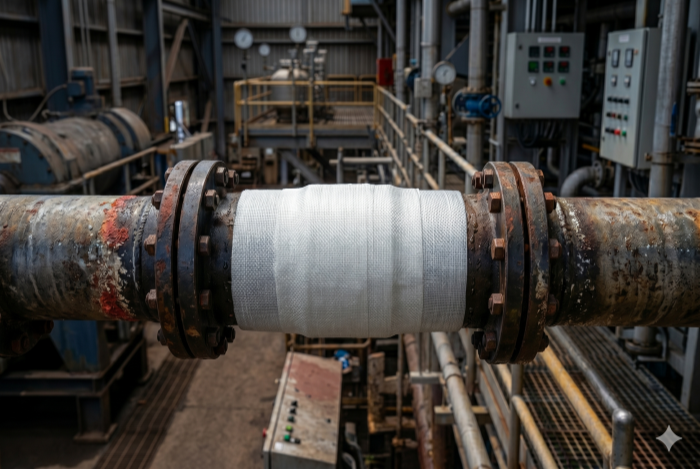
Executive Summary: For plant reliability superintendents, boiler room engineers, and utility operators across chemical, thermal power, and district heating plants, high-pressure steam line breaches represent high-stakes operational threats. Escaping superheated steam can cause severe thermal injuries, structural asset erosion, and costly environmental compliance penalties. Industry maintenance data shows that an unscheduled boiler feed or steam network trip costs heavy industrial complexes upwards of $220,000 per hour in idle production capacity. Compounding the challenge, standard rubber-gasketed clamps and generic adhesive tapes fail rapidly under cyclical thermal expansion, where metal expansion coefficients cause rigid patches to crack or delaminate. Selecting an engineered pipe leakage solution requires composite systems capable of withstanding extreme continuous heat while managing heavy thermal expansion and contraction stresses.
The Thermal Cyclic Challenge: Why Standard Patches Fail on Steam Piping
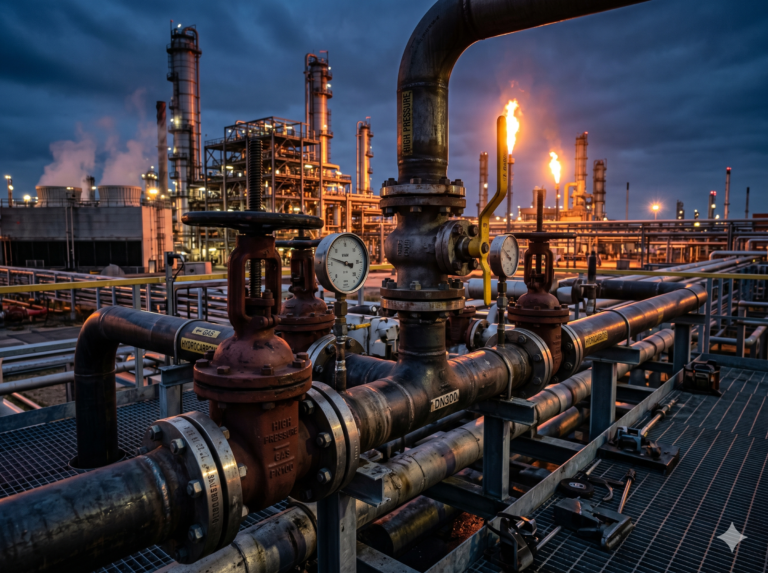
Steam lines and boiler condensate returns are dynamic systems. As boiler loads shift between peak operations and idling, pipe walls undergo continuous thermal cycles, expanding and contracting axially and radially. Carbon steel pipelines, for instance, exhibit a thermal expansion rate of roughly 12 microns per meter per degree Celsius.
When a repair relies on brittle room-temperature adhesives or rigid metal split clamps with synthetic rubber seals, thermal cycling rapidly destroys the joint. Standard elastomers harden, glaze, and embrittle above 100°C, causing secondary steam blowouts. Furthermore, rigid metal enclosures create localized friction and concentrated mechanical shear against expanding steel. To understand how composite repairs adapt across industrial infrastructure—from low-temperature chillers to heavy chemical loops—explore our master guide, The Ultimate Guide to Industrial Pipe Leakage Solutions: Emergency Repair & Long-Term Prevention.
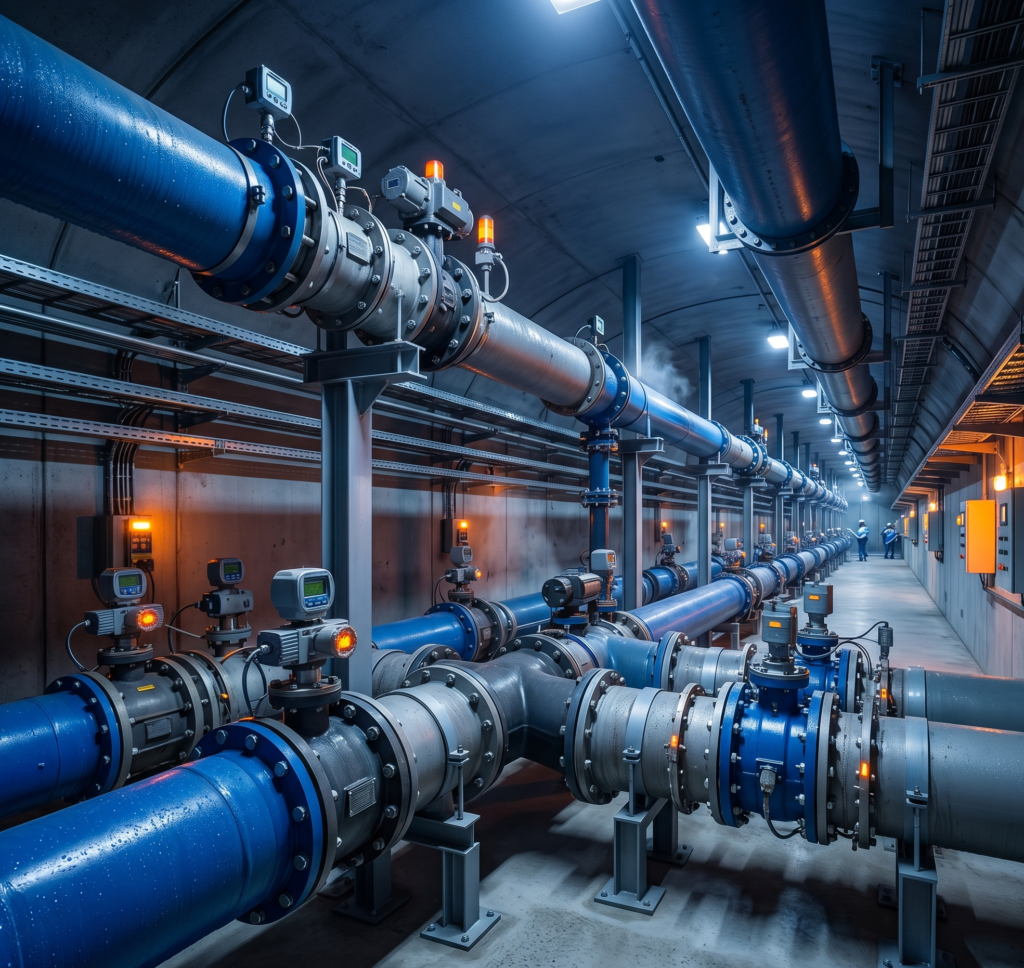
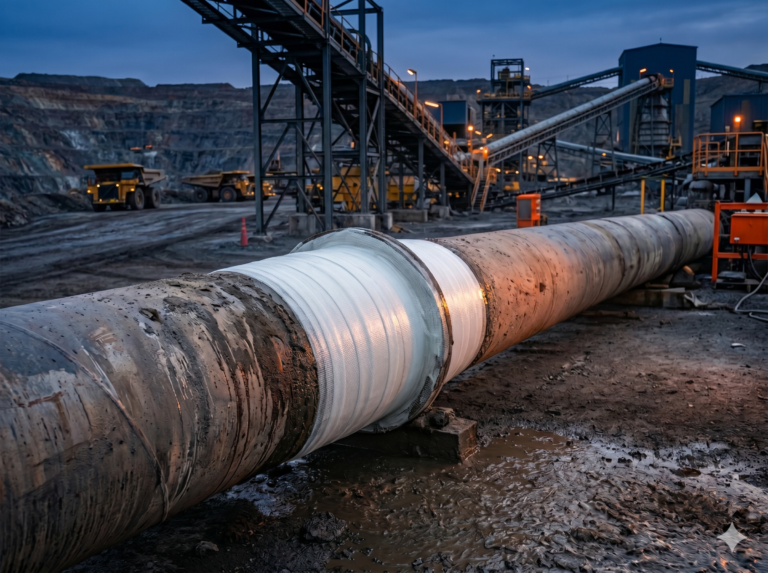
Figure 1: High-pressure industrial steam distribution line undergoing structural composite reinforcement to arrest thermal stress cracking.
Thermal Physics: High-Temperature Limits and Thermal Shock Stability
An engineered high-temperature pipe leakage solution must deliver chemical and mechanical stability across intense temperature shifts. The Andarepair composite repair architecture achieves this balance through tailored material properties:
- Continuous High-Temperature Tolerance: Standard Andarepair polyurethane-fiberglass systems operate continuously up to 150°C (302°F), with short-term excursion capacity reaching 200°C (392°F). When paired with high-temperature epoxy putties, peak resistance handles demanding condensate and saturated steam lines.
- Matched Thermal Modulus & Elastic Recovery: Unlike unreinforced resin, the multi-axial woven fiberglass matrix provides continuous dimensional restraint. It allows micro-elastic expansion that matches the thermal coefficient of steel, preventing interfacial shear failure between the wrap and the substrate.
- High Glass Transition Temperature ($T_g$): The dense cross-linked prepolymer resin maintains an elevated glass transition threshold, ensuring the cured shell retains its 85 Shore D hardness without softening under continuous thermal exposure.
Steam Line Field Safety Rule: Never apply composite bandages to an active, pressurized steam jet without first isolating the line and relieving internal head pressure. Trapped high-velocity dry steam will tunnel through uncured resin layers, compromising the structural matrix before polymerization finishes.
Technical Testing: Performance Specifications for Steam & Boiler Assets
Utility engineers and asset management supervisors require verified mechanical parameters before approving composite systems for thermal utility runs. Below are the verified metrics for the Andarepair system:
| Engineering Parameter | Verified Technical Value | Boiler Plant Operational Benefit |
|---|---|---|
| Continuous Temperature Limit | -50°C to 150°C (-58°F to 302°F) | Reliably handles saturated steam, district heating, and boiler returns. |
| Short-Term Peak Tolerance | Up to 200°C (392°F) Excursion | Absorbs transient steam spikes without polymer matrix softening. |
| Pressure Capacity at Heat | Up to 450 PSI (31 Bar) | Withstands heavy boiler feed line and distribution manifold surges. |
| Cure Hardness & Rigidity | 85 Shore D | Resists steam erosion, wire drawing, and external pipe hanger friction. |
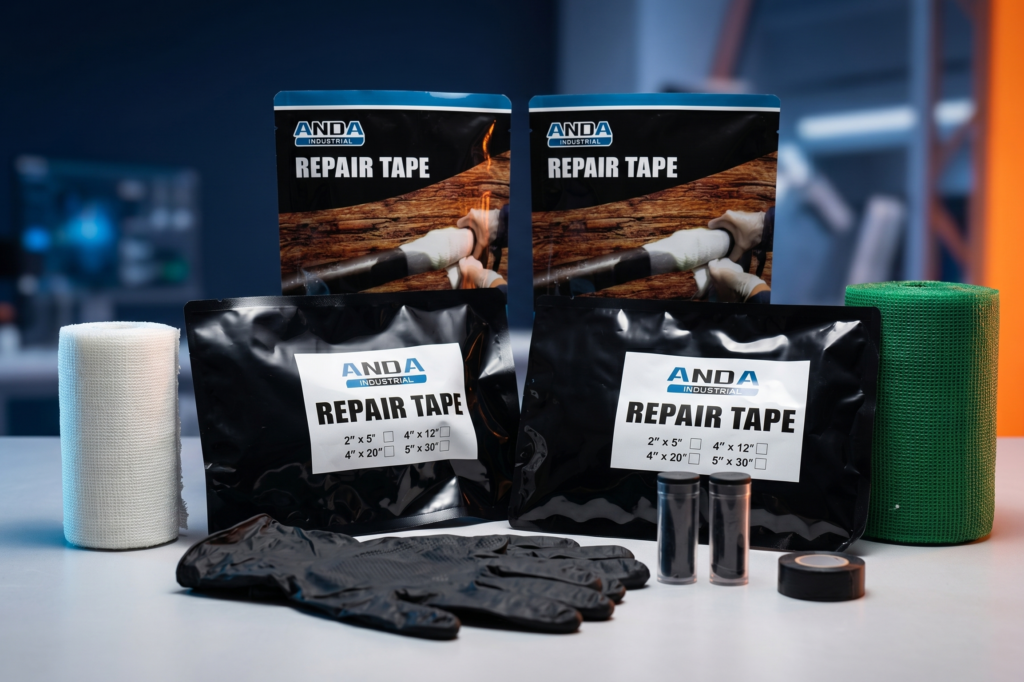
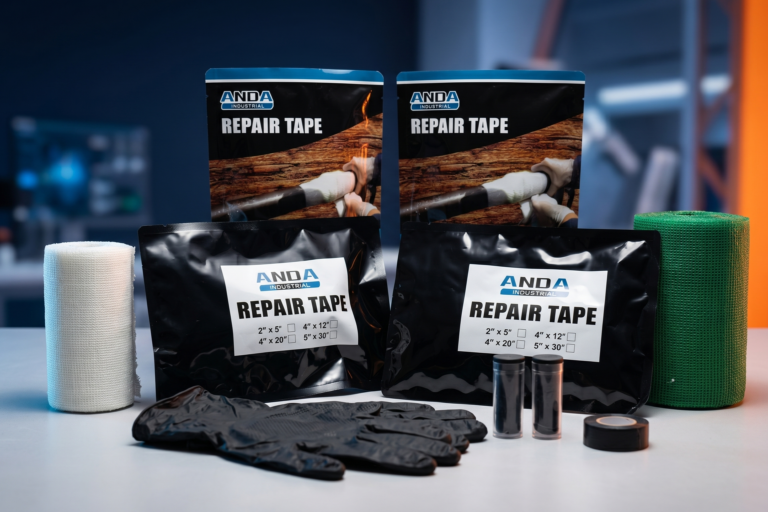
Figure 2: Plant stockrooms maintain pre-staged composite kits to prevent costly emergency boiler shutdowns.
The 5-Step Field Protocol: Repairing High-Temperature Lines
To secure a code-compliant, permanent composite seal on steam condensate and boiler supply networks, field technicians should follow this specific procedure:
- System Depressurization & Thermal Stabilization: Isolate line valves and relieve internal steam pressure completely. Allow the pipe surface temperature to cool below 60°C (140°F) before application to prevent premature resin flash-curing during wrap layup.
- Substrate Descaling to White Metal: Mechanically strip away rust scale, baked-on lagging, and oxidized coatings using an angle grinder or coarse abrasive cloth. Create a 60-grit rough anchor profile (St2/Sa2.5 standard) extending 4 inches past the defect boundaries.
- Pack High-Temperature Epoxy Bedding: Thoroughly knead the high-temperature, steel-filled epoxy putty until uniform. Firmly pack the material into pitting craters, pinholes, or weld toe cracks, fairing the edges flush against the pipe wall.
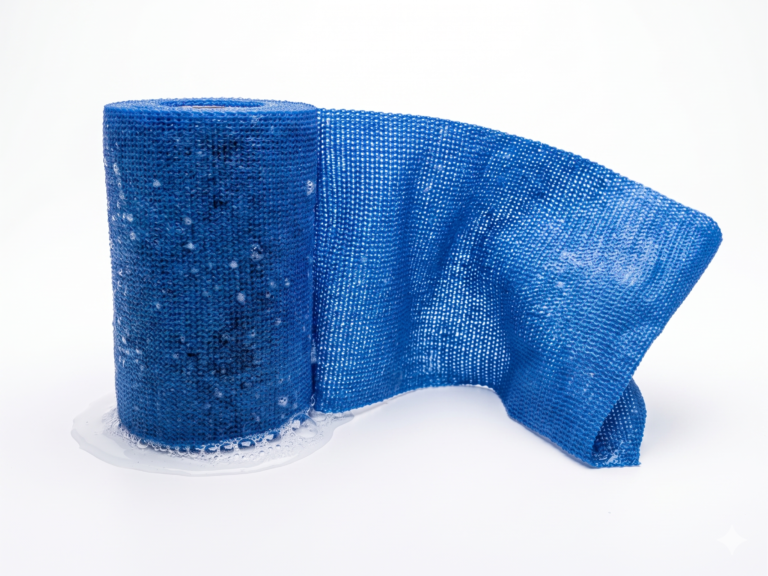
- Hydrate & Tension-Wrap the Composite: Submerge the water-activated fiberglass bandage roll in water for 5 to 10 seconds. Beginning 3 inches upstream of the leak site, wrap tightly under maximum manual tension, maintaining a 50% overlap until an 8-to-12-layer structural jacket is built over the defect zone.
- Consolidation & Gradual Thermal Ramp: Smooth the composite wrap firmly by hand in the direction of the spiral to expel micro-voids. Allow 30 minutes for a complete cure to 85 Shore D hardness. Bring the steam line back online gradually, ramping temperature over 15 to 20 minutes to prevent thermal shock.
FABE Procurement Realization: Strategic Value for Boiler Plants
Standardizing emergency containment with an industrial-grade pipe leakage solution provides clear structural and financial returns for boiler facility operators:
- Features: Andarepair composite systems combine high-density, steel-filled heat-resistant epoxy compounds with moisture-cured woven fiberglass bandages vacuum-sealed in 4-layer aluminum foil packaging.
- Advantages: Conforms 360 degrees to thermal elbows, reducers, and weld seams, withstands continuous operating heat up to 150°C (with 200°C peaks), and flexes safely with cyclic metal expansion.
- Benefits: Eliminates high-cost hot-work permits, nitrogen line purging, and heavy welder call-out fees, allowing maintenance crews to restore operating pressure in under an hour.
- Evidence: Broadly deployed across thermal power generation facilities, chemical steam headers, and food-processing autoclaves globally. Supported by certified high-pressure burst testing and complete MSDS documentation.
Safeguard High-Temperature Steam Piping from Unplanned Outages
Are you a boiler room supervisor, power station reliability engineer, or industrial MRO distributor seeking certified high-temperature pipe leak solutions? Andarepair provides wholesale volume pricing, customized emergency kit arrays, and complete technical consulting.
Request a High-Temp Wholesale Quote & Free Sample Kit
Direct Engineering Support via Senior Export Management: Phone/WhatsApp: +86 18753386785 | Full Technical Data Sheets (TDS) and Thermal Limits supplied upon inquiry.