Executive Summary: Large-diameter conduits exceeding 24 to 48 inches—such as thermal power plant intake culverts, regional municipal water trunk mains, and mining slurry penstocks—present massive structural containment challenges when localized wall thinning occurs. According to 2026 civil infrastructure asset surveys, excavating and replacing a single section of a 36-inch main line costs upward of $450,000 in heavy crane operations, traffic rerouting, and line decommissioning. For large radii, mechanical split sleeves become logistically impractical due to excessive deadweight and extreme bolt torque requirements. This technical brief details the engineering criteria for deploying multi-roll, wide-format epoxy pipe wrap systems on large-diameter networks to rebuild hoop structural integrity and arrest external corrosion without crane lifts.
The Scale Challenge: Why Trunk Lines Demand Continuous Multi-Roll Overlap
On small-diameter pipes, a single technician can easily maintain radial tension around the pipe circumference. In contrast, large-diameter infrastructure involves vast surface surface areas where single-roll coverage is insufficient. When massive volume loops experience wall thinning from internal erosion or external soil stress, the sheer circumference demands continuous multi-roll interlocking techniques to avoid cold joints between wraps.
Furthermore, large-diameter steel and concrete lines exhibit significant structural flexing during flow rate changes. The composite repair sleeve must provide an engineered balance of high tensile modulus and elasticity to absorb flexural movement without shear delamination. To explore comprehensive maintenance frameworks across diverse materials and plant scales, review our foundational master guide, The Ultimate Guide to Industrial Pipe Leakage Solutions: Emergency Repair & Long-Term Prevention.
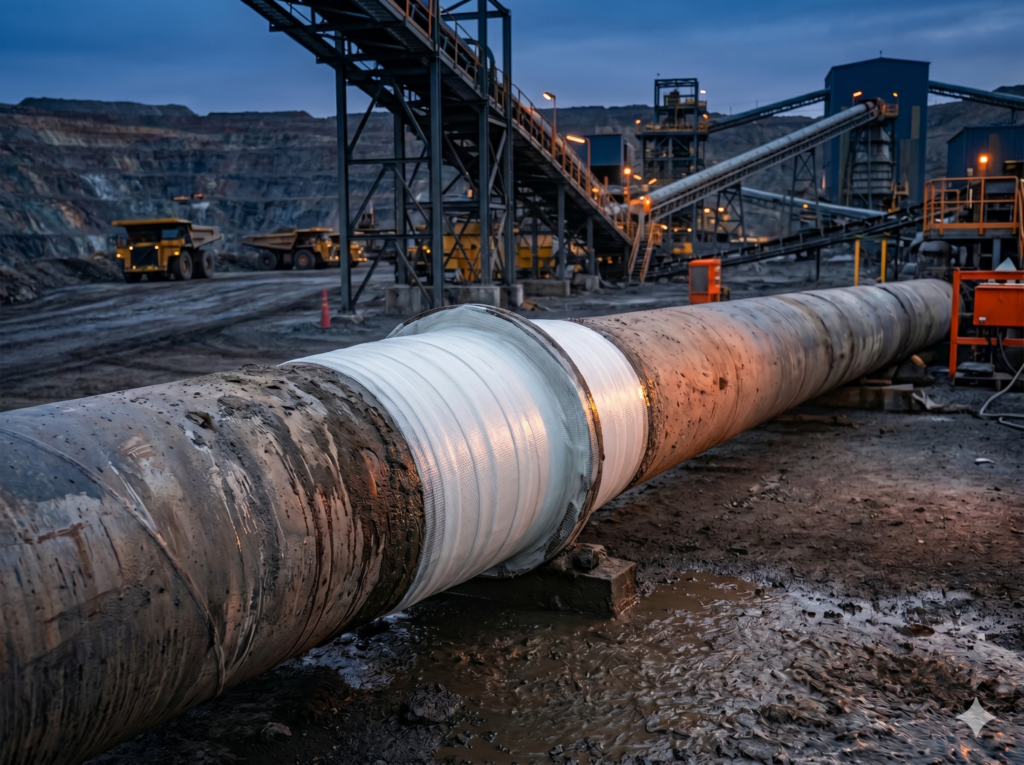
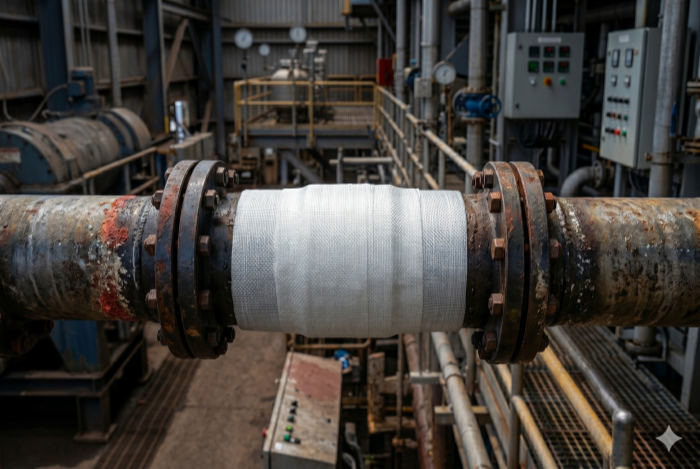
Figure 1: Large-diameter cooling water conduit undergoing wide-format structural composite reinforcement.
Engineering Dynamics: Calculating Multi-Roll Coverage for Mega-Pipes
Executing a successful composite restoration on pipes over 24 inches with an industrial-grade epoxy pipe wrap requires staging roll handoffs and controlling resin cure times:
- Wide-Format Bandage Selection: Use 6-inch, 8-inch, or 12-inch wide composite rolls. Wider rolls maximize axial coverage per pass, cutting application time and preventing premature resin hardening on large circumferences.
- Continuous Overlap Protocol (The 6-Inch Rule): When transitioning from one roll to the next, the new bandage must overlap the previous roll by at least 6 inches (150 mm) before the underlying layer sets, ensuring a monolithic structural joint.
- Load-Bearing Bedding Putty: On large surfaces with wide corrosion craters, a high-compressive load-transfer epoxy putty must be faired over the metal defect to eliminate hollow voids under the composite wrap.
Civil Asset Guideline: For large-diameter pipes, execute wrapping with a synchronized two-person crew. One technician passes the heavy roll under the invert while the second maintains constant tension over the crown, ensuring uniform compression without sagging.
Technical Sizing Matrix: Large Diameter Composite Requirements
Civil engineering teams and pipeline asset leads should use this standard sizing matrix to calculate composite inventory requirements for large-diameter infrastructure repairs:
| Nominal Pipe Size (NPS) | Recommended Roll Width | Minimum Overlapping Layers | Field Labor Configuration |
|---|---|---|---|
| 24 Inch (600 mm) | 6 Inch (150 mm) Rolls | 8 – 10 Layers | 2-Technician Synchronized Crew |
| 36 Inch (900 mm) | 8 Inch (200 mm) Rolls | 10 – 12 Layers | 2-Technician Crew + 1 Staging Lead |
| 48 Inch (1200 mm) + | 12 Inch (300 mm) Rolls | 12 – 16 Layers | 3-Technician Team with Scaffolding |
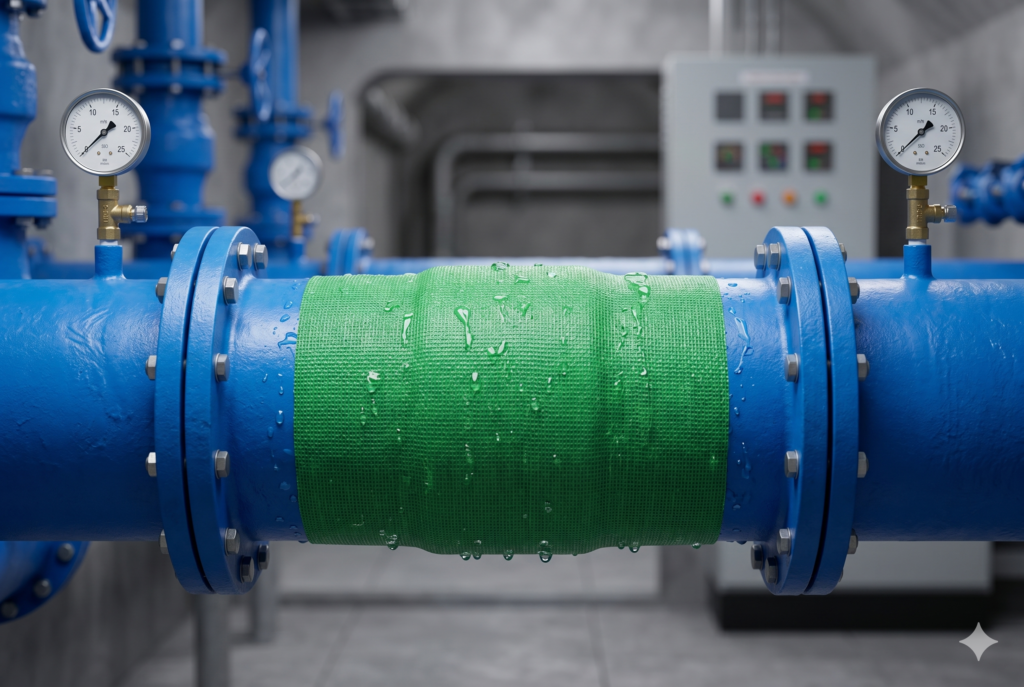
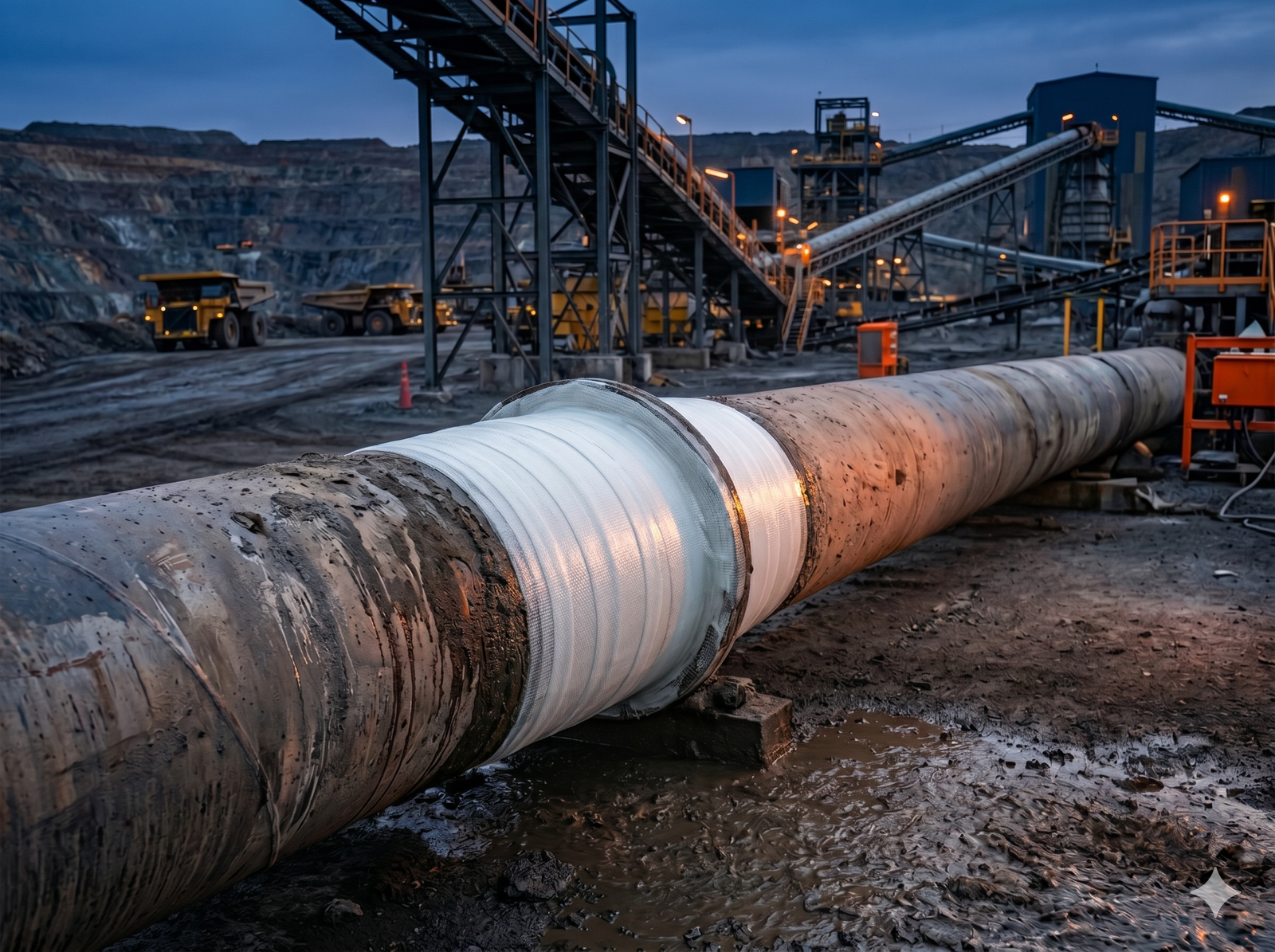
Figure 2: Infrastructure utilities inspect cured composite sleeves on large-diameter transmission lines to ensure full structural compliance.
Field Deployment Protocol: 5 Steps for Large-Diameter Main Repairs
To execute a durable, high-pressure composite sleeve over large trunk infrastructure using a heavy-duty epoxy pipe wrap, engineering crews should follow this field sequence:
- Clearance and Surface Profiling: Excavate at least 24 inches of clear working space around the entire pipe perimeter. Mechanically abrade the surface across a zone extending 12 inches beyond the damaged area to create a coarse anchor profile.
- Substrate Leveling with Epoxy Bedding: Blend the heavy-duty load-transfer putty and trowel it across the pitted region, building a uniform contour to eliminate flat spots or sharp edges.
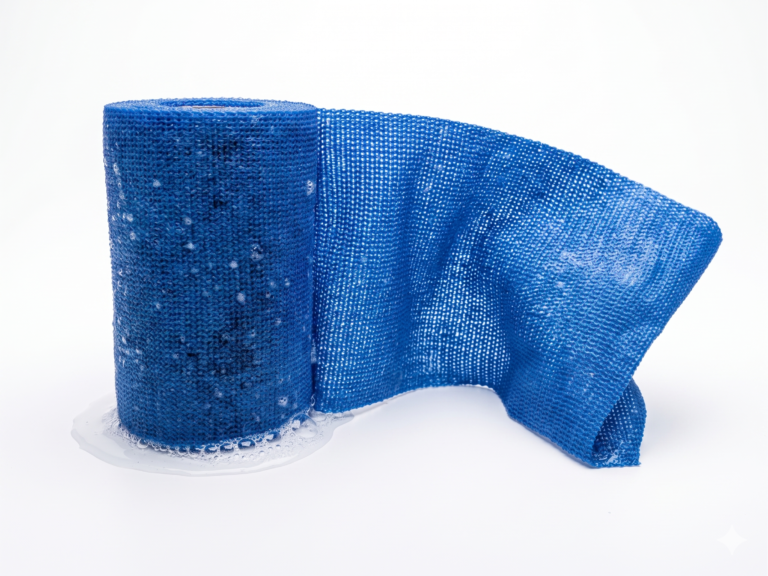
- Staged Roll Hydration: Activate wide-format composite rolls sequentially rather than all at once. Dunk the first roll in water for 8 to 10 seconds and initiate wrapping immediately.
- Synchronized Hand-off Wrapping: Two technicians pass the roll continuously around the large pipe circumference, keeping firm radial tension with a 50% overlap. Splice in subsequent rolls with a 6-inch overlap before the previous wrap hardens.
- Radial Consolidation and Cure: Wrap the completed composite section with perforated compression film or smooth firmly by hand in the direction of the wind to drive out voids. Allow 30 to 45 minutes for full polymer cure before backfilling or repressurizing.
FABE Commercial Alignment: Enterprise Value for Infrastructure Utilities
Large-scale pipeline projects require reliable engineering performance combined with flexible supply logistics. Here is how Andarepair supports major infrastructure operators:
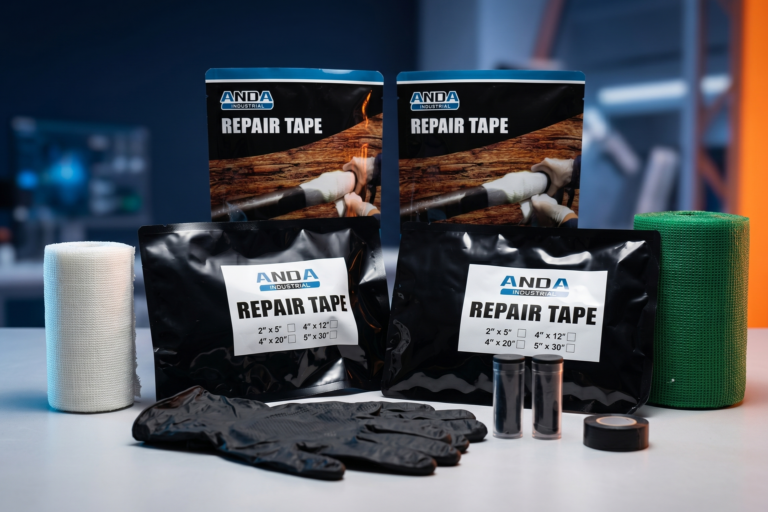
- Features: Our heavy-duty epoxy pipe wrap systems are available in wide-format rolls (up to 12 inches) with high-density fiberglass weaves engineered for large circumferences.
- Advantages: Eliminates the need for custom mechanical split sleeves or crane equipment, curing into an 85 Shore D composite armor that handles structural pipe flexing and external soil loads.
- Benefits: Cuts large-diameter emergency remediation costs by up to 75% compared to open-cut pipe replacement, keeping vital municipal water and plant cooling circuits operational.
- Evidence: Deployed on power utility cooling lines, municipal water trunk lines, and heavy mining infrastructure globally. Supported by certified burst test data and comprehensive MSDS documentation.
Source Wide-Format Composite Systems for Large-Scale Infrastructure
Are you a civil infrastructure contractor, municipal water utility engineer, or industrial distributor managing large-diameter pipeline repairs? Andarepair supplies wide-format composite wraps, tailored multi-roll kits, and complete technical consulting.
Request a Bulk Project Quote & Technical Data Sheet
Direct Technical Support via Senior Export Management: Phone/WhatsApp: +86 18753386785 | Full project sizing calculations supplied upon inquiry.